
Hong Kong, July 17, 2026 — The Asia Onchain Finance Summit brought together leaders from Ethereum institutional infrastructure, asset management, neo-banks, payment companies, RWA ecosystem players and the DeFi liquidity participants to examine how global finance is moving from blockchain experimentation towards real-world implementation.
Jointly initiated by Baillie Gifford, ETH Hong Kong Hub, Blockunion (business arm of SNZ Holding), and co-hosted by Sharplink, GSR, Lido Institutional and EthSystems, the summit marked one of Hong Kong's most indepth and insightful institutional RWA gatherings to date, bringing together the full onchain finance value chain — from asset issuance and institutional infrastructure to liquidity, payments, distribution and end-user applications,under one roof.
Across fireside chats, keynotes and panel discussions, speakers explored a common question: what are the use cases for institutional onchain finance and how big is the opportunity?
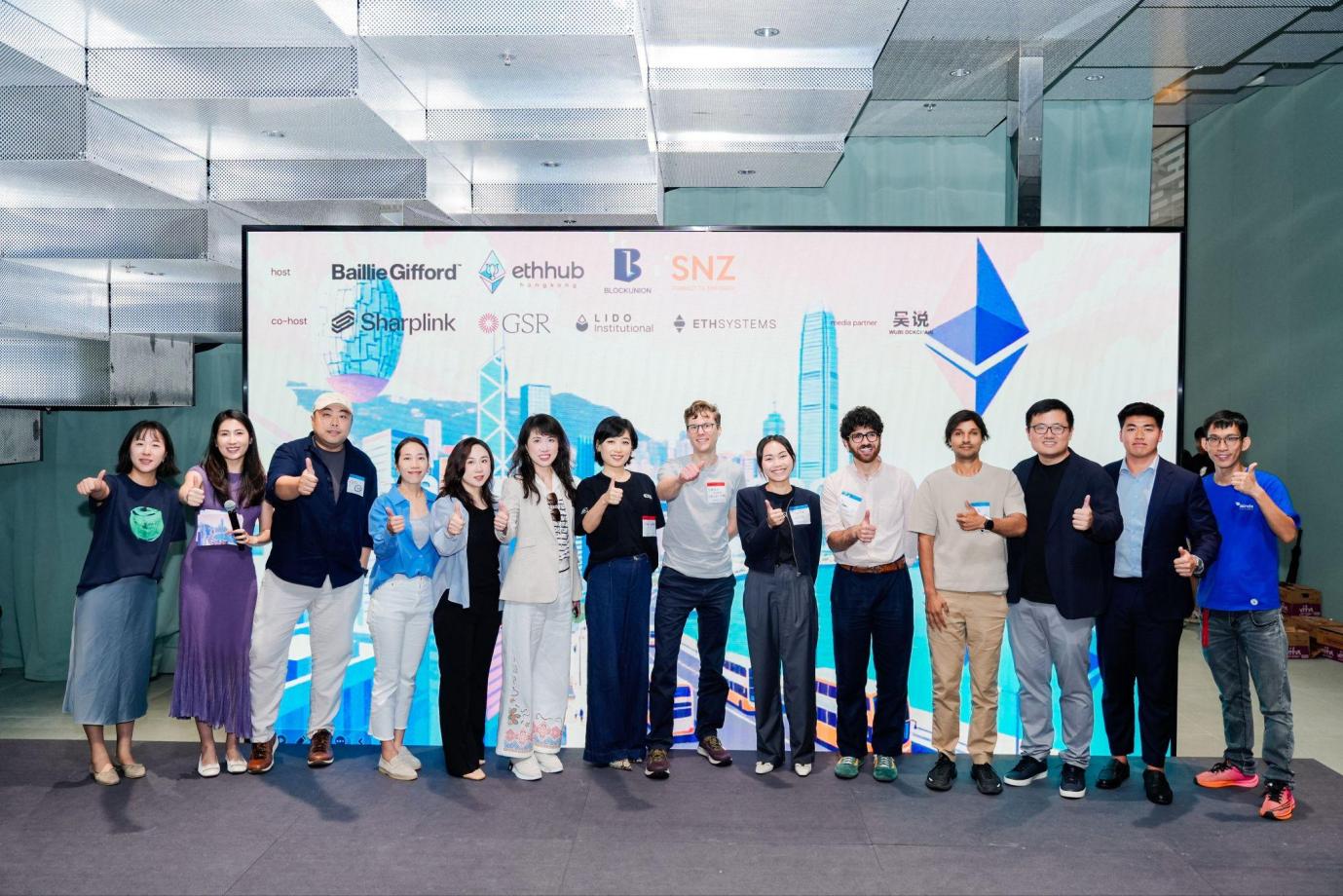
From Proofs of Concept to Institutional Infrastructure
The summit opened with a fireside chat between Mo Jalil, CEO and Co-Founder of EthSystems, and Henry Chen, Partner and CBO of SNZ Holding and Blockunion.
Drawing on his experience at Goldman Sachs and as the former Head of Institutional Privacy and APAC Enterprise at the Ethereum Foundation, Mo described a significant change in how financial institutions are approaching public blockchains. While major institutions have explored blockchain technology for years, he noted that many of those initiatives remained at the proof-of-concept stage. Over the past 18 months, greater regulatory clarity and increasing alignment across jurisdictions have made it possible for institutions to consider Ethereum for real business applications.
The remaining challenge is confidentiality. Public blockchains offer shared, verifiable infrastructure, but financial institutions cannot expose client information, positions or sensitive business activity. EthSystems was created to address this gap by building confidential systems that combine different privacy technologies according to institutional requirements.
“The concept of a public ledger is extremely attractive to them. The big ‘if’ is: how do you become compliant?”
— Mo Jalil, CEO and Co-Founder, EthSystems
Mo explained that selective disclosure can allow authorized parties to access the information they need while keeping it private from others. In this model, privacy and compliance are not opposing objectives; they are both necessary for institutions to operate on permissionless infrastructure with confidence.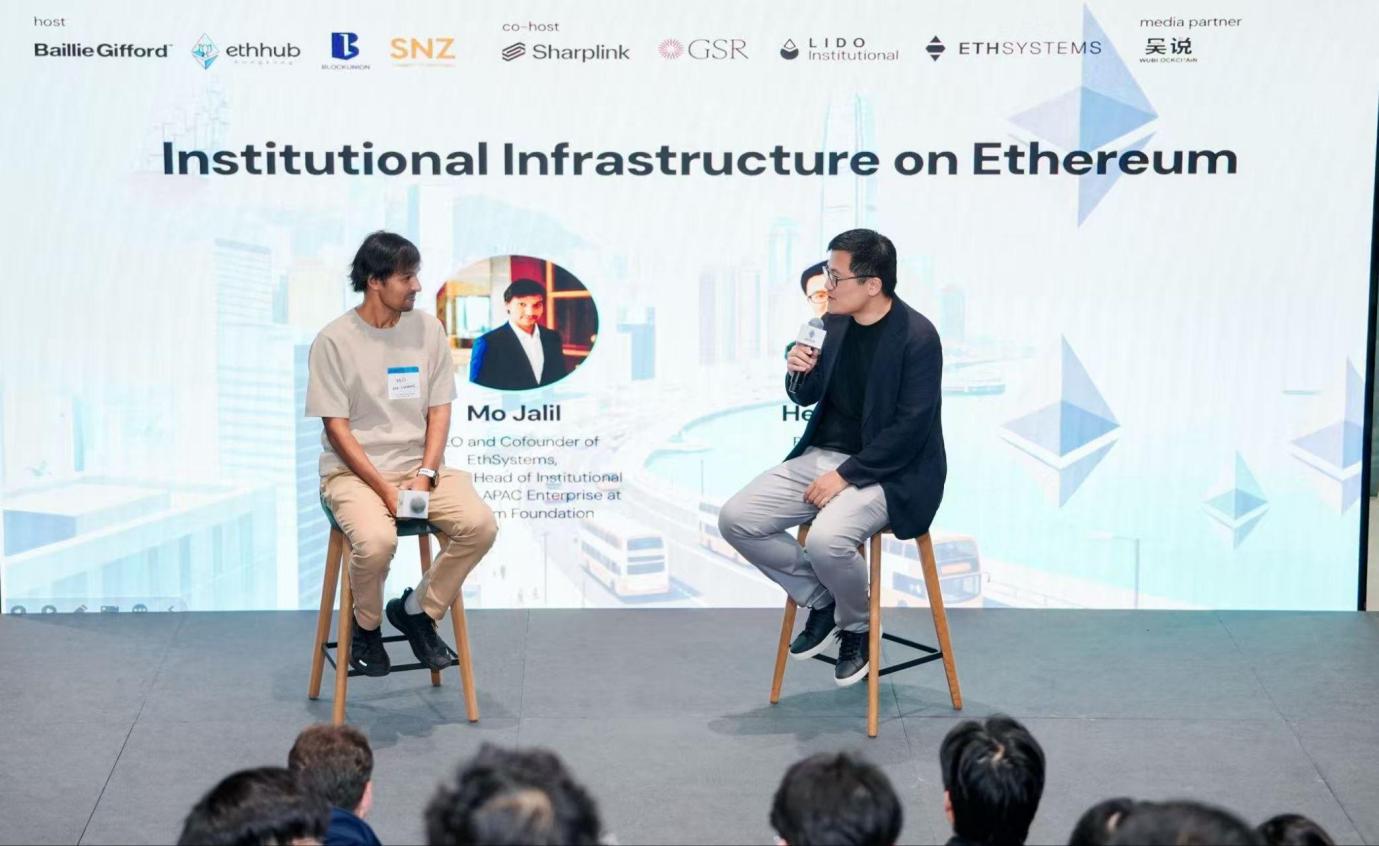
Ethereum Enters a New Era of Institutional Adoption
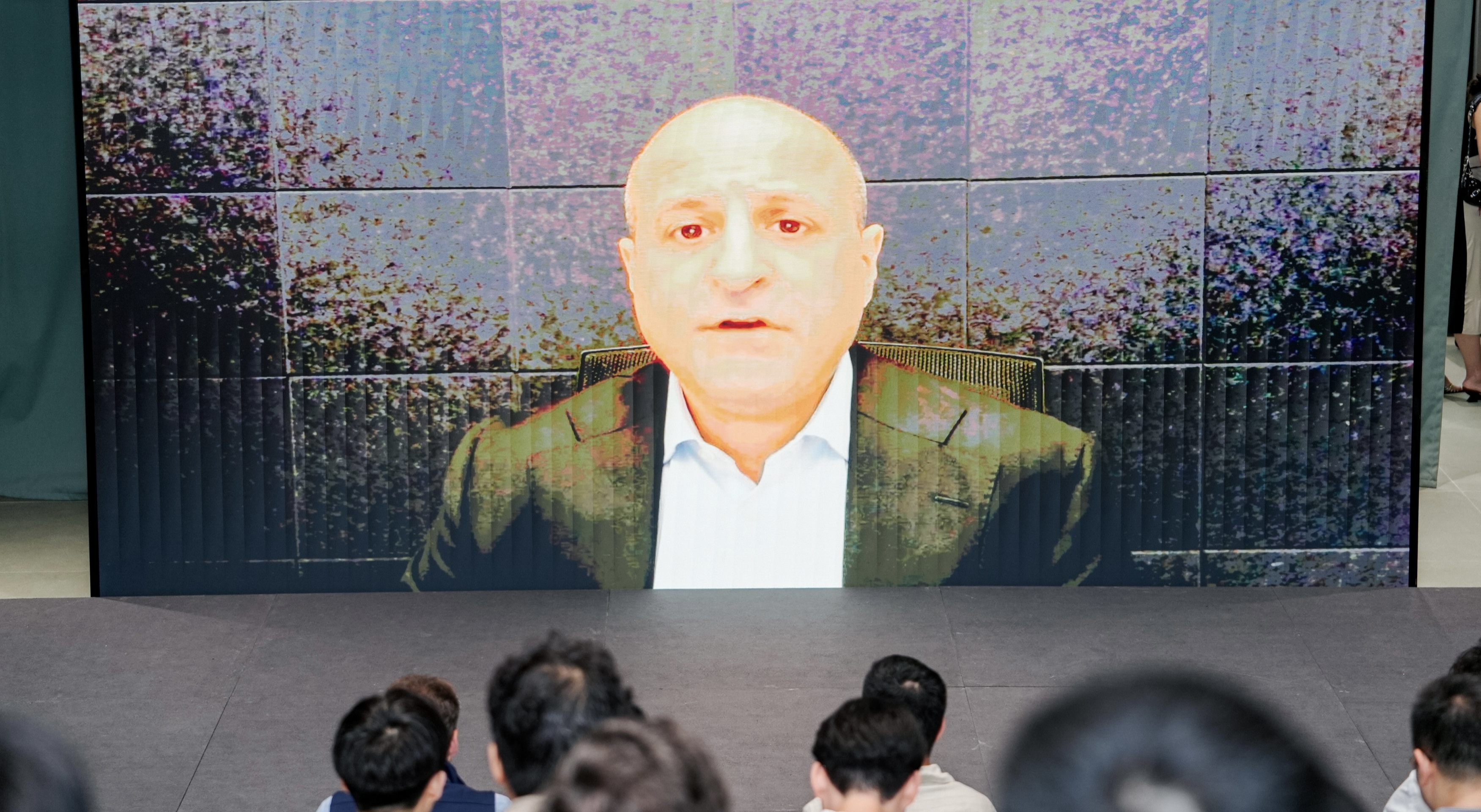
In a video address, Joseph Chalom, CEO of Sharplink, described Ethereum as entering a new era of institutional adoption. Pointing to its leadership across stablecoins, tokenisation, DeFi and the emerging agentic finance economy, he argued that Ethereum is increasingly becoming the foundation for the next generation of global financial infrastructure.
Chalom also highlighted the recent launches of Ethlabs, Ethereum Institutional and EthSystems, describing them as complementary organisations focused on protocol development, institutional adoption and privacy infrastructure. Supported by ecosystem contributors including SharpLink, he said these initiatives will help accelerate Ethereum's next phase of institutional growth.
"Ethereum is going on offense again."
— Joseph Chalom, CEO, Sharplink
He concluded by expressing confidence that Ethereum will remain the leading platform for institutions building credibly neutral, decentralized financial infrastructure, welcoming what he described as "the new Ethereum era."
Theo Golden: Tokenisation Should Be the Same, but Better
Theo Golden, Head of Digital Assets and Tokenisation at Baillie Gifford, delivered the keynote “Tokenisation: Same, But Better — and What Comes Next.”
Representing a 118-year-old investment partnership managing approximately US$266 billion across public equity, private equity, fixed income and multi-asset strategies, Theo framed tokenisation as a long-term transformation of financial infrastructure rather than a short-term product trend.
He introduced the Baillie Gifford Enhanced Yield Fund ($BAGEY), an actively managed, natively issued tokenised fund built on public blockchain infrastructure. The fund’s portfolio currently offers a yield of approximately 7%.
Unlike structures that place a tokenised wrapper or special-purpose vehicle around an existing fund, $BAGEY is designed so that the token represents direct ownership in the fund and the blockchain serves as the legal register of ownership.
“The fund is the token, and the token is the fund.”
— Theo Golden, Head of Digital Assets and Tokenisation, Baillie Gifford
Theo highlighted several features intended to translate blockchain infrastructure into practical investor outcomes:
- Native issuance without an additional wrapper or SPV
- The blockchain serving as the legal record of ownership
- USDC subscriptions and redemptions, subject to applicable requirements
- T+0 redemptions of up to 10% of the fund’s NAV
- An indicative NAV published every 15 minutes during market hours
- Peer-to-peer transferability within the fund’s permitted framework
$BAGEY is available to eligible professional investors in the UK, Switzerland, the Cayman Islands and Hong Kong. Theo described the fund as the first step in a broader journey: moving from onchain cash and money-market products toward yield, investment products and a more complete financial system built on programmable infrastructure.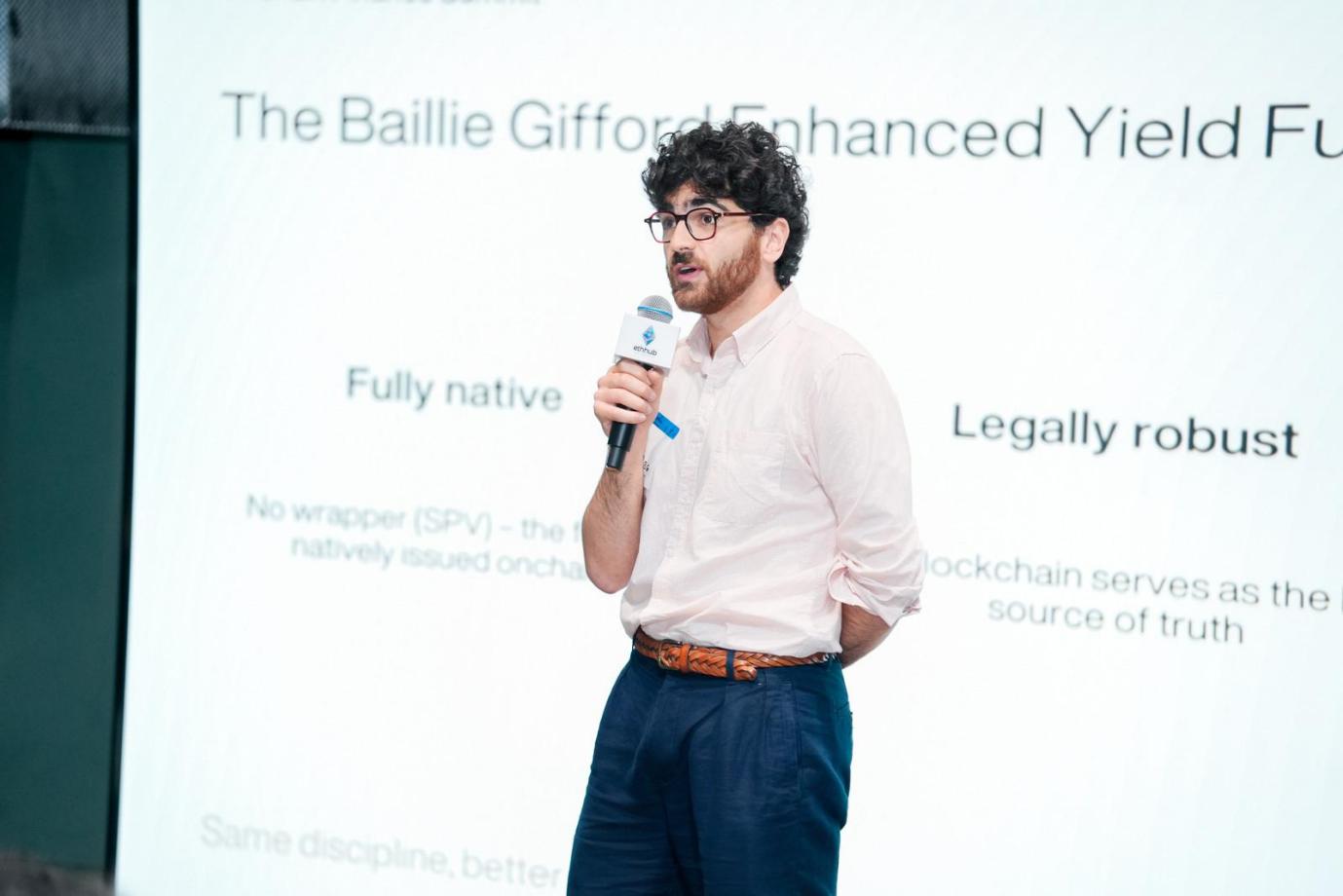
Onchain Banking: Wallets, Ledgers and the New Financial Stack
The “Onchain Banking and Fintech” panel brought together Luca Cosentino, Head of Digital Assets at Cross River Bank; Julie Luo, Director of Global Coverage at GSR; and Theo Golden, moderated by Henry Chen.
Luca argued that tokenisation matters because the money, information and assets represented on a user’s screen often move through separate systems and on different timelines. A shared blockchain ledger can reduce reconciliation, improve interoperability and make financial assets more useful across platforms.
“Wallets will be the new branches.”
— Luca Cosentino, Head of Digital Assets, Cross River Bank
He identified three potential benefits for users: broader distribution of financial services as infrastructure costs decline; greater interoperability between platforms; and the ability to make assets productive through collateralisation, borrowing and other financial applications.
Julie Luo discussed the role of institutional liquidity in the development of tokenised assets. Drawing on GSR’s work across market making, OTC trading and regulated payment infrastructure, she noted that the RWA market is moving beyond isolated experiments. As more funds and securities come onchain, liquidity providers will be essential to improving settlement, supporting secondary activity and connecting regulated products with wider onchain markets.
Theo added that tokenised funds can become more than a new source of supply. Once asset managers build the custody, transfer and operational infrastructure required to issue funds onchain, they also become a new source of demand for tokenised securities. Over time, he argued, investors may no longer distinguish between a conventional security and a tokenised one; they will simply own the underlying asset through better infrastructure.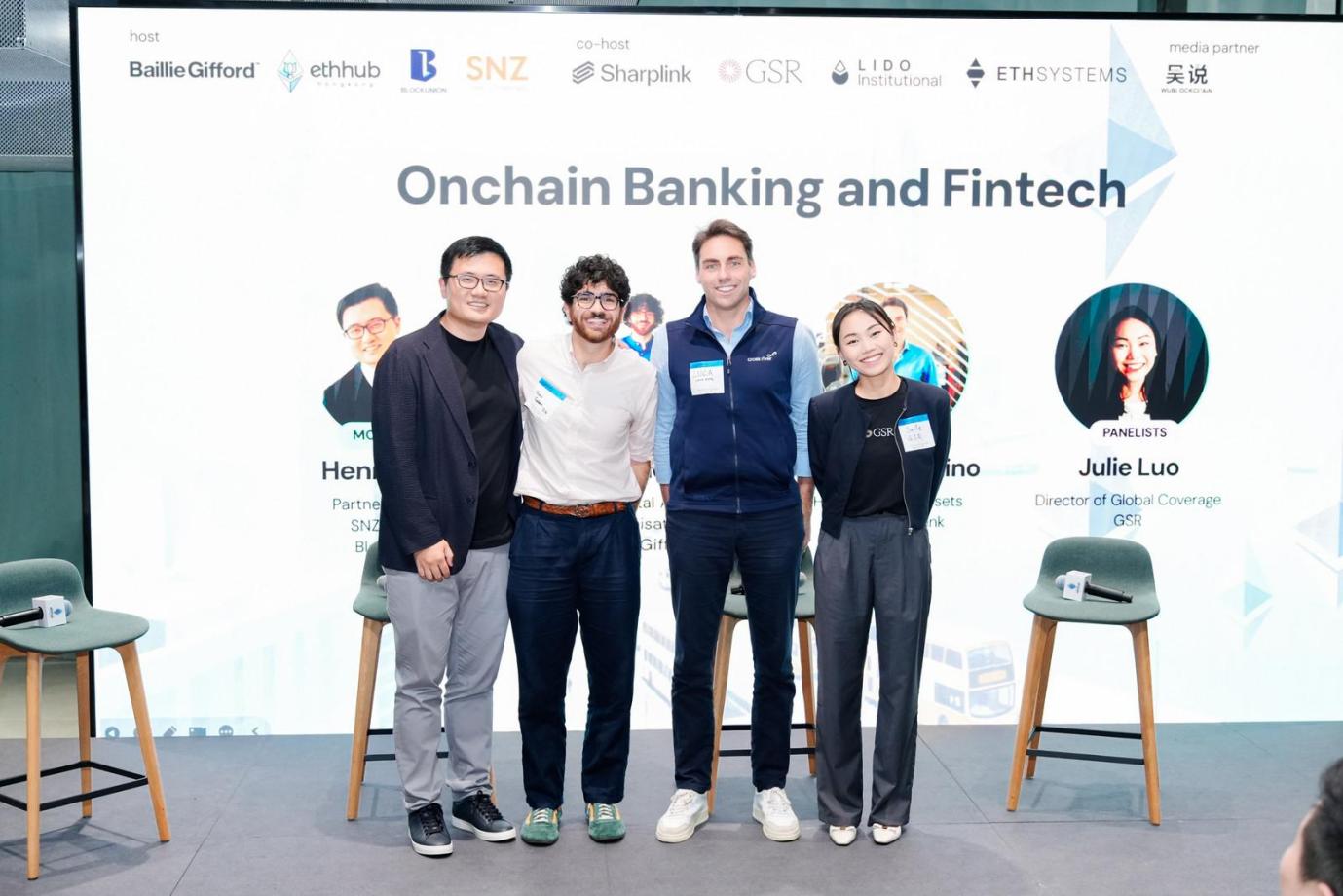
Stablecoins Move Money; Tokenised Funds Put It to Work
In the fireside chat “Onchain Payment Network and Yield,” Larry Ma, CSO of SNZ Holding, spoke with Theo Golden and Louis Liu, Founder and CEO of KUN Global, about how stablecoin payments and tokenised investment products could converge.
Louis described KUN’s work across fiat and crypto payments, cards and financing for cross-border trade. He said the company processed approximately US$2 billion in payment volume last year and expects that figure to reach US$5–6 billion this year. For payment companies and their clients, the challenge is not only moving money quickly and safely, but also managing capital that sits idle between transactions.
From the perspective of merchants and payment platforms, Louis identified three priorities when evaluating an onchain yield product: the quality of the underlying assets, ease of use, and an attractive risk-adjusted return. API-based integration, straightforward onboarding and efficient subscriptions and redemptions are therefore as important as the product itself.
Theo argued that stablecoins have created a universal liquidity layer for cross-border finance. Tokenised money-market funds have already shown that onchain capital can remain programmable while earning yield. The next step is to introduce a wider range of high-quality yield products into working-capital and treasury workflows, giving payment companies, trade-finance businesses and merchants more options for capital that is not immediately required.
Both speakers emphasized that these products should complement, rather than replace, existing payment and liquidity tools. Their value will depend on how effectively regulated issuers, payment networks, custodians and market makers can connect the full lifecycle — from payment and investment to liquidity and redemption.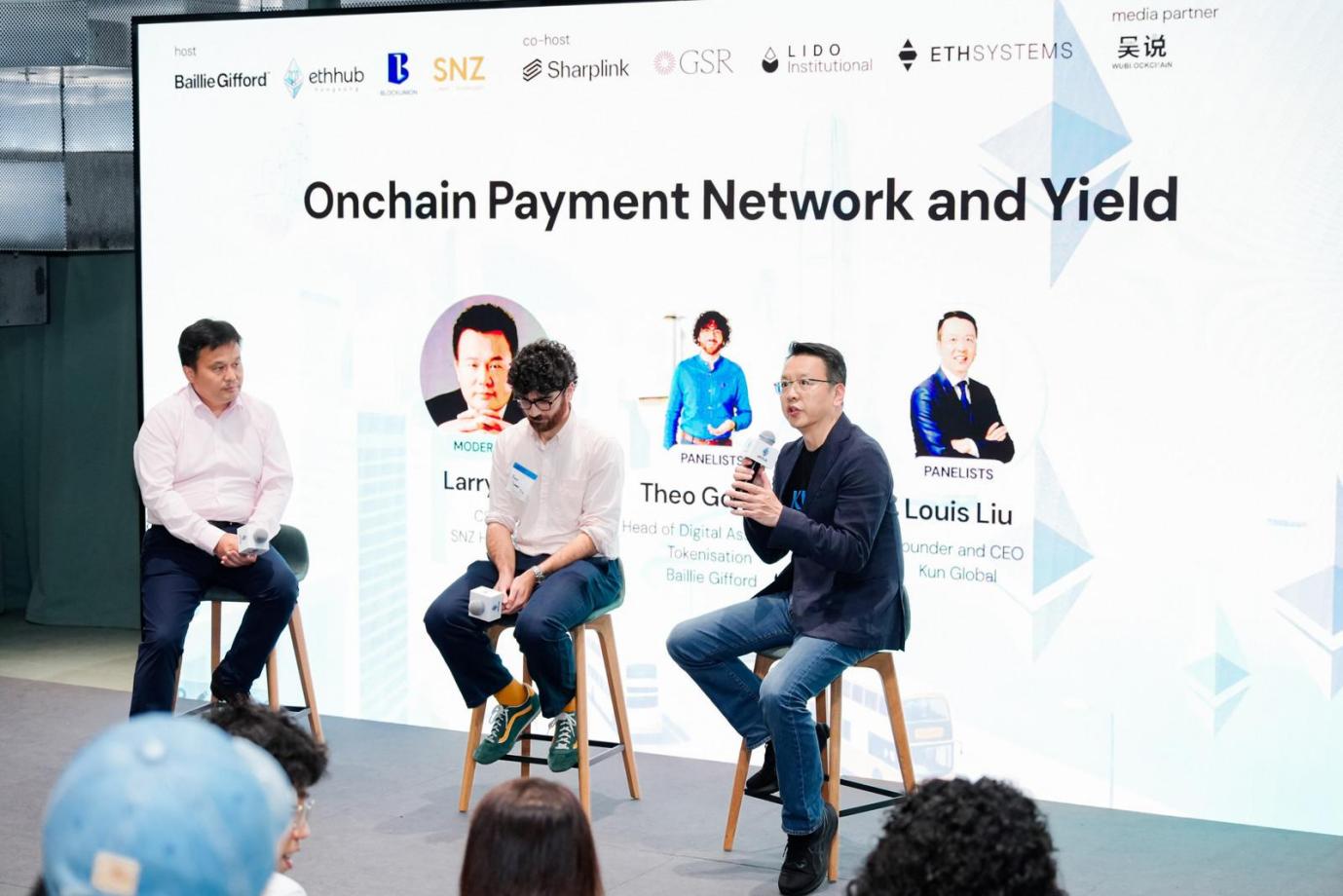
Global RWA Markets: Moving from Issuance to Use
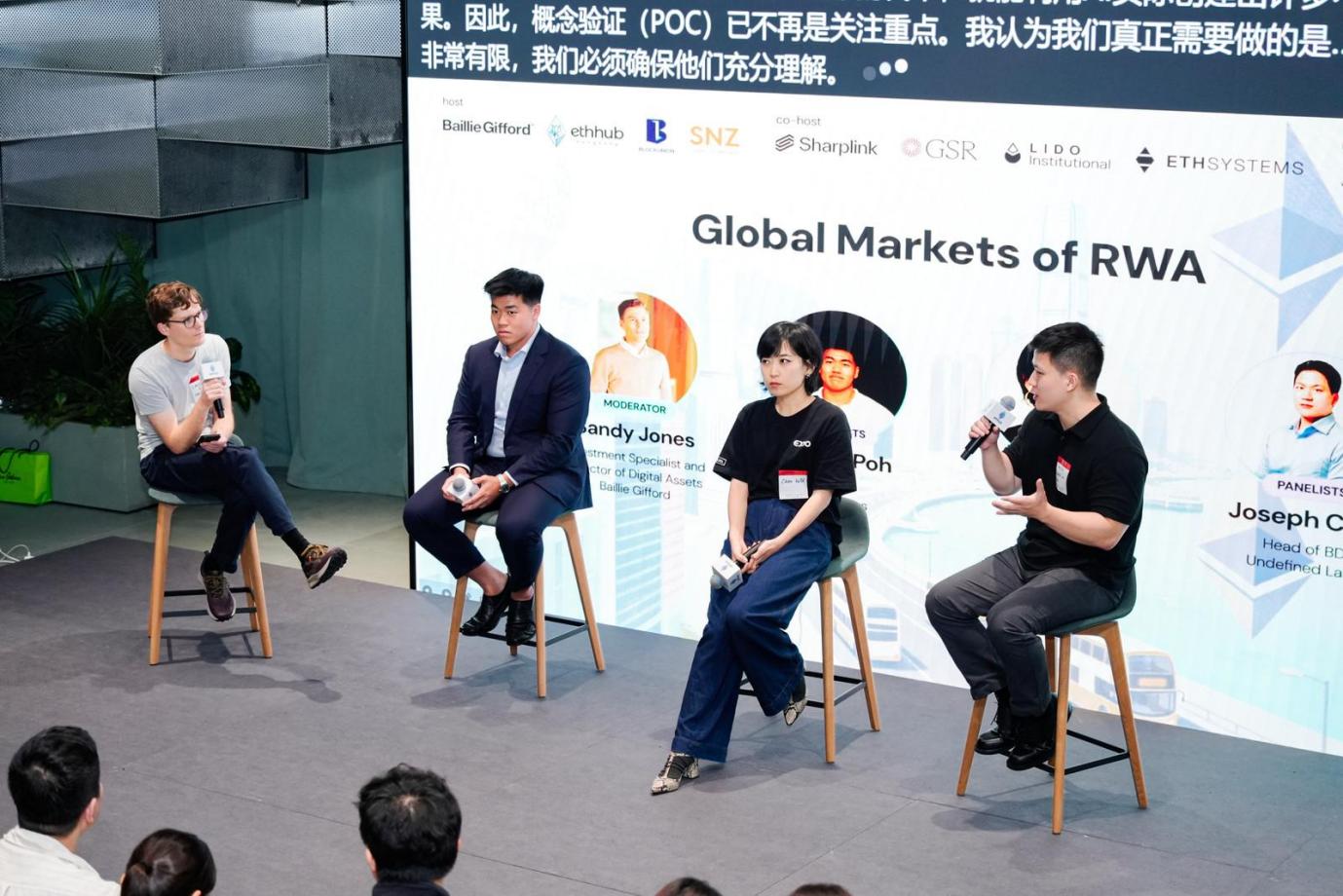
The final panel, “Global Markets of RWA,” was moderated by Sandy Jones, Investment Specialist and Director of Digital Assets at Baillie Gifford. She was joined by Darien Poh, CEO of Synthesys; Wu Chen, Founder and CEO of EX.IO; and Jiwon “Joseph” Choi, Head of Business Development at Undefined Labs.
The discussion examined how RWA markets are developing across Hong Kong, Korea and global distribution networks. Speakers agreed that the market is progressing beyond the question of which assets can be tokenised. The more important questions are now whether tokenised assets carry clear legal rights, reach investors efficiently, support liquidity, and can be used in real financial activity.
Darien described a growing convergence among banks, wealth managers, consumer applications and payment providers as they adopt stablecoin rails and expand into broader financial services. However, he identified settlement and fragmented distribution as two persistent barriers. For tokenisation to deliver on its promise, investors and platforms need consistent access to products across markets rather than another set of disconnected systems.
Wu Chen shared EX.IO’s experience listing more than 40 RWA products and reviewing a significantly larger global pipeline. She observed increasing demand not only from crypto-native investors seeking regulated, fundamentally backed products, but also from traditional investors looking for more efficient access to private credit, private equity and other assets.
She proposed a simple test for every tokenised product: if investors already have effective access offchain, why do they need to buy it onchain? The strongest use cases are those in which tokenisation improves access, liquidity, transferability or the ability to use an asset in another financial transaction.
Joseph Choi offered a Korean market perspective, noting that financial institutions are actively studying blockchain and conducting experiments, including through Hong Kong-based entities. He argued that the next stage will require more than technical proofs of concept: institutions need deeper expertise, clearer regulatory frameworks and stronger connections between traditional finance and crypto-native practitioners.
Across the panel, one conclusion stood out: issuance alone is not enough. The maturation of RWA markets will be measured by secondary-market activity, collateralisation, lending, payments and other forms of real utilization.
Hong Kong Connects the Onchain Finance Value Chain
The summit concluded with an invitation-only VIP reception, where speakers, institutional investors and ecosystem leaders continued discussions beyond the formal programme. As participants reflected on the day's conversations and explored future opportunities, the evening reinforced Hong Kong's growing role as a meeting point for institutional finance and the onchain economy.
About Baillie Gifford
Baillie Gifford is an independent investment partnership founded in 1908 in Edinburgh, owned and run by 54 partners who all work at the firm. The firm’s mission is to find game-changing companies (both public and private) that can sustain growth and provide returns for clients over five to ten years and sometimes longer. With 1,600 staff and assets under management of $262bn (SGD 339bn/HKD 2,054bn) (at 30 June 2026), it has offices in Edinburgh, Amsterdam, Dublin, Frankfurt, Hong Kong, London, New York, Shanghai, Singapore, Toronto, and Zurich.
About ETH Hong Kong Hub
ETH Hong Kong Hub is Asia’s first Ethereum physical community hub, supported by the Ethereum Foundation and co-operated by SNZ and ETHTAO. The Hub is dedicated to connecting the East and West, bridging Web2 and Web3, and driving long-term growth and adoption through community building and resource coordination.
About SNZ and Blockunion
SNZ is a research-driven institution focused on value investing, community empowerment, and venture building for the Web 3 industry. As early Ethereum backer and Asia community leader, SNZ is dedicated to supporting community engagement, business connection and founder success, across infrastructure, DeFi, fintech and payment, as well as real world applications. As its key initiatives to grow Ethereum ecosystem in Asia and Chinese-speaking community. Blockunion is SNZ Holding’s business operation and incubation arm and has actively supported the launch of ETHTao, Hong Kong Ethereum Community Hub, in alignment with Ethereum Foundation. Learn more at: https://snzholding.com/
About Sharplink
Sharplink (NASDAQ: SBET) is a leading institutional-grade Ethereum treasury platform designed to give public market investors smarter, more productive exposure to ETH. Ethereum underpins the majority of global stablecoin, tokenized real-world assets and decentralized finance settlement. Sharplink was founded in 2019 and is headquartered in Miami, Florida. Learn more at: sharplink.com.
About GSR
GSR is crypto’s leading capital markets and financial services platform, delivering institutional liquidity, trading, and asset management solutions to more than 1,000 clients and counterparties worldwide. With over a decade of market experience, GSR partners with teams across the full digital asset lifecycle, from startup inception and token strategy to treasury management, market intelligence, and capital solutions for multi-billion-dollar foundations and institutions. Learn more at https://www.gsr.io/