
ETH Hong Kong Hub, Futu, Sharplink, and SNZ hosted an institutional closed-door forum in Central, Hong Kong on June 8, 2026. The event, themed "The AI Surge: Navigating On-chain" convened senior decision-makers from traditional financial institutions, digital asset management firms, family offices, and leading Web3 companies to discuss institutional strategy at the convergence of artificial intelligence and blockchain.
The forum addressed two questions at the top of the institutional agenda in 2026: how computing infrastructure can be structured as an investable asset class, and how institutions can build on-chain execution capability within existing compliance frameworks.

Futu: Building the Integrated On-Chain and Off-Chain Platform
Sherry Zhu, Global Head of Digital Assets at Futu, described the defining feature of the current cycle as the narrowing operational divide between on-chain and off-chain assets — and argued that integrated platforms with cross-asset execution capability are positioned to capture a structural advantage in institutional services.
Kelvin Zhu, Head of Virtual Asset Business at Futu Hong Kong, presented product developments underpinning that strategy:
- Full licensing and integration of PantherTrade with Futu Securities: In March, PantherTrade (Hong Kong) Limited — Futu's wholly-owned virtual asset trading platform — received full regulatory approval from the SFC. With Futu Securities now integrated into the platform, PantherTrade is providing private wealth clients with institutional-grade, large-block crypto execution services.
- Securities-collateralised virtual asset credit: Futu Securities received SFC approval this month to introduce securities margin virtual asset services to eligible Hong Kong clients — enabling clients to pledge securities and fund holdings as collateral for virtual asset credit lines and trade digital assets directly, without liquidating existing positions.
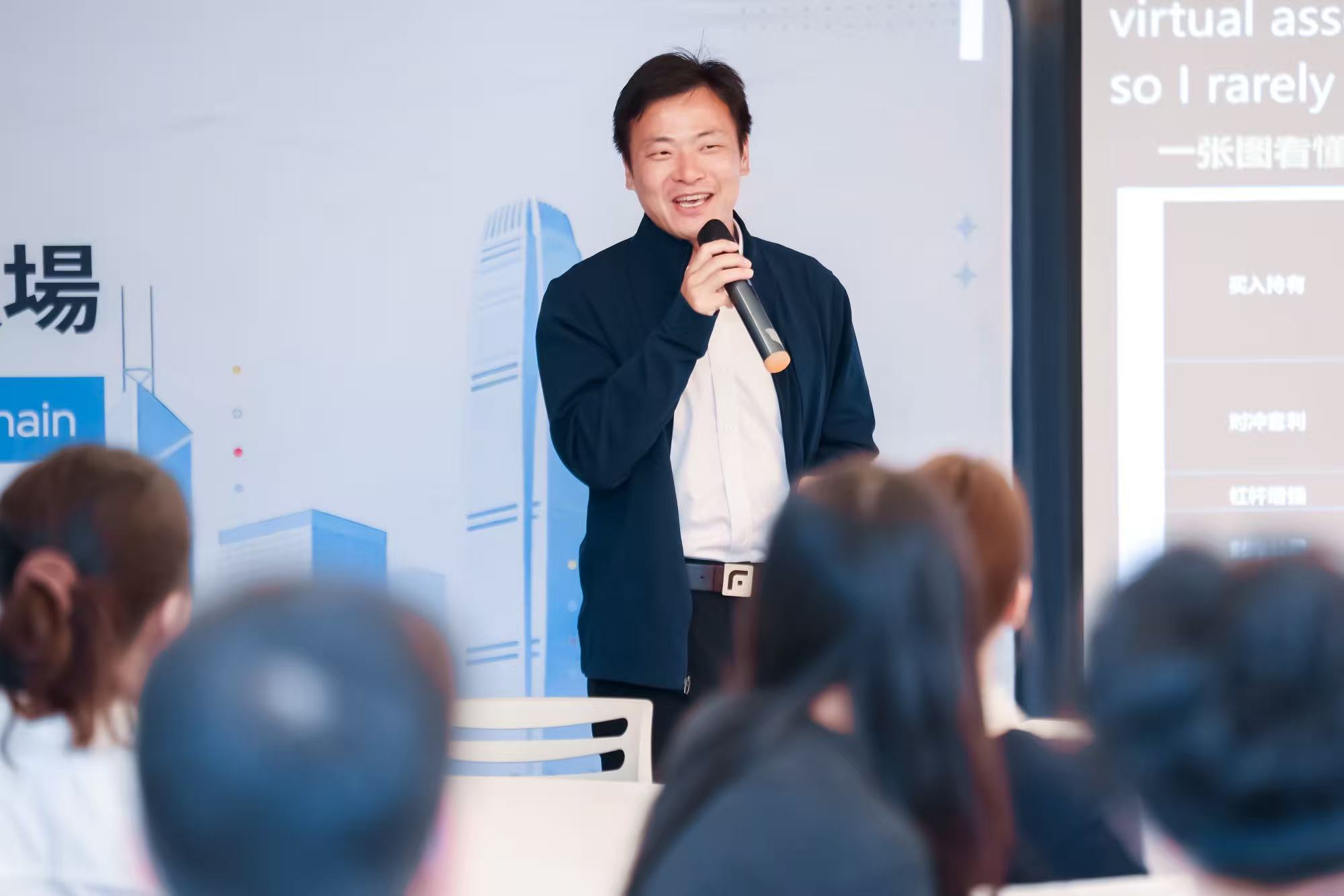
Joseph Chalom: Ethereum as the World's Financial Ledger
Joseph Chalom, CEO of Sharplink (SBET) and former Global Head of Digital Assets at BlackRock, delivered the keynote address on Ethereum's long-term value as institutional-grade financial infrastructure.
Chalom described the structural inefficiencies embedded in the traditional financial system — settlement cycles ranging from T+1 to T+3, fragmented reconciliation processes, and intermediary costs amounting to over US$9.3 trillion in annual friction. He argued that Ethereum is emerging as a programmable settlement layer built to address these gaps:
"Ethereum's value lies not only in the asset itself, but in its role as an economic security mechanism. Ether generates nearly 3% annualised yield through staking, and network security scales in proportion to staking participation — a self-reinforcing dynamic."
Chalom also introduced Agentic Finance as an emerging paradigm: by 2027, AI agents are expected to be deployed at scale across institutional and individual portfolios, autonomously executing capital allocation decisions — from idle asset identification to yield optimization and real-time portfolio rebalancing — with minimal human intervention. On-chain settlement infrastructure, he argued, is a prerequisite for this model to function at scale.
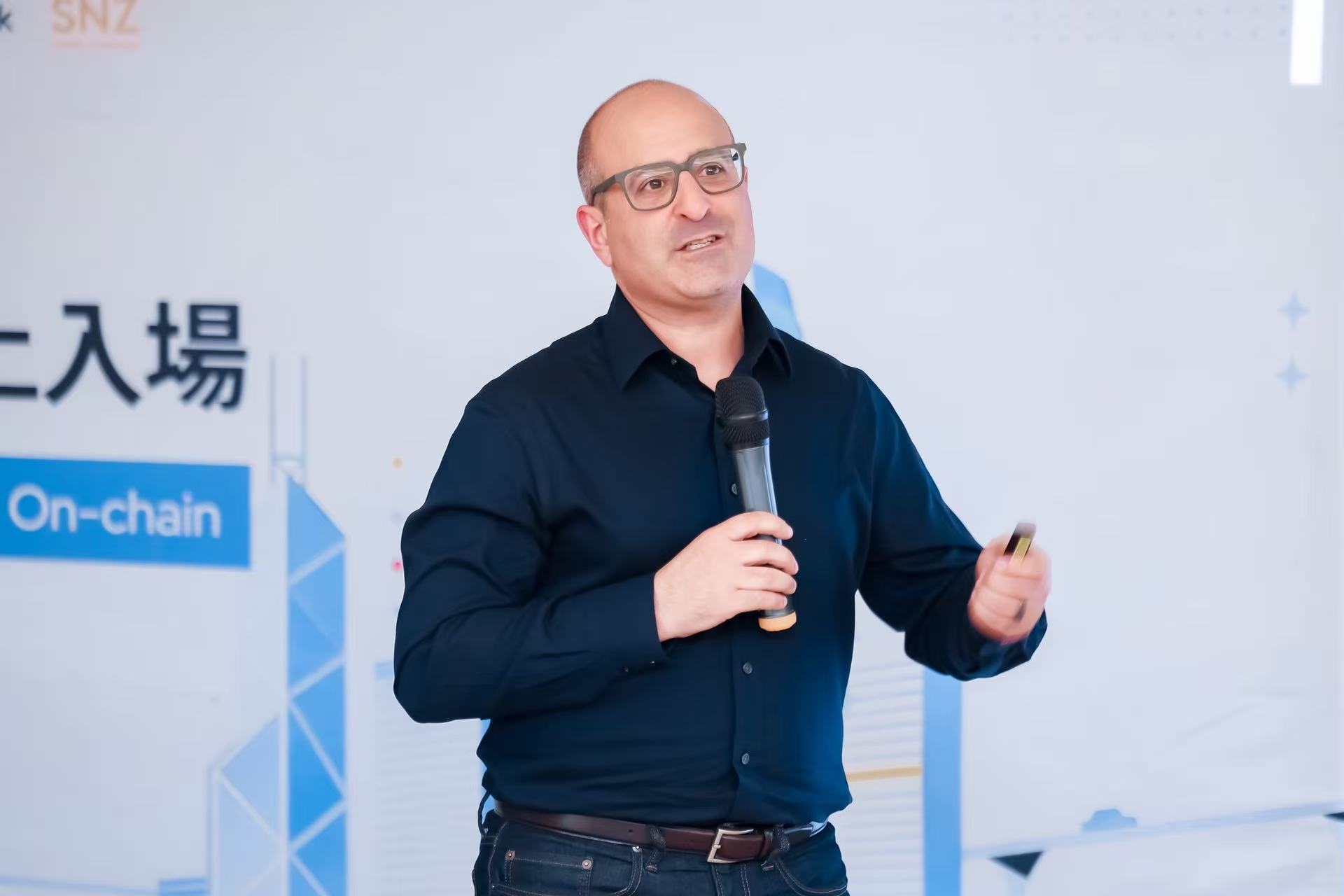
Didier Zheng: Korea as a Structural Allocation Opportunity
Frontier technology investor Didier Zheng presented a macro framework for Korea as an underappreciated structural opportunity, citing the country's diplomatic flexibility, mature industrial base, and near-term absence of credible domestic competition in its highest-value export segments.
He highlighted two primary allocation themes:
- Beta exposure via memory semiconductors: Samsung and SK Hynix maintain dominant positions in High Bandwidth Memory (HBM), with supply remaining structurally constrained and no meaningful domestic alternative expected to emerge for at least five years. Didier noted that the sector's valuation framework is transitioning from a cyclical P/B multiple to an earnings-driven P/E basis — a re-rating that has historically preceded significant upward price revisions.
- Idiosyncratic alpha via defence, LNG shipbuilding, nuclear energy, and power equipment: Hanwha Aerospace continues to secure procurement contracts within the NATO supply chain. Escalating geopolitical risk is sustaining demand for LNG transport capacity. The projected US power deficit — estimated at tens of gigawatts by 2028 — is generating durable export order flow for Korean power equipment manufacturers.
On blockchain's longer-term role, Didier emphasised that the primary growth in network utilisation will come from machine-to-machine economic activity rather than individual users. Citing Gartner's projection that 20% of global economic participants will be autonomous agents by 2030, he argued that blockchain's function as a trust-minimised settlement layer grows in strategic importance as that transition accelerates.
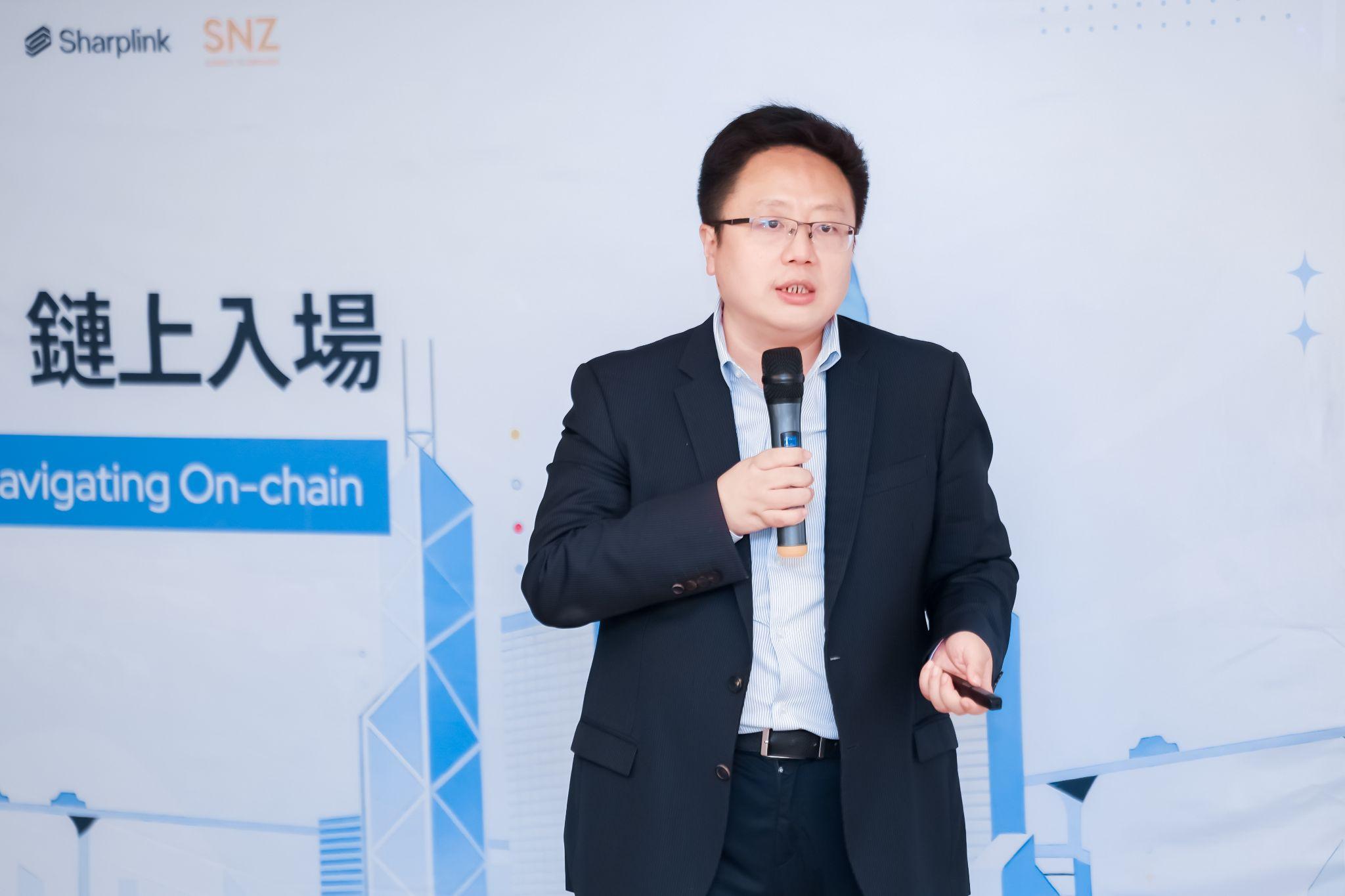
Mu Chen: AI and the Wealth Management Operating Model
Mu Chen, CEO of Canopy, shared how AI is reshaping private wealth management infrastructure. Canopy is a Singapore-based wealthtech platform with over US$120 billion in assets under administration across nearly 100 single- and multi-family offices. Its internal AI systems process 8–10 billion tokens per month across 13 large language models.
Chen identified three structural challenges facing UHNW clients and their family offices:
- Data fragmentation: Approximately 80% of family offices in Asia continue to aggregate cross-custodian data manually in spreadsheets, resulting in operational inefficiency and elevated error rates.
- Hidden cost drag: While headline management fees average approximately 1%, total cost of ownership — including FX conversion spreads, idle cash drag, and decision latency — can reach 2.5–3% on an all-in basis.
- Suboptimal cash deployment: In the absence of a consolidated, real-time portfolio view, significant capital remains in low-yielding positions. The constraint is visibility, not intent.
Canopy is developing AI and agent-driven tooling purpose-built for the wealth management vertical, with the objective of extending institutional-grade portfolio intelligence to a broader family office client base. The firm's targets for 2030 are a tenfold increase in assets effectively managed per practitioner and a reduction in total wealth management cost drag of 20–50 basis points.
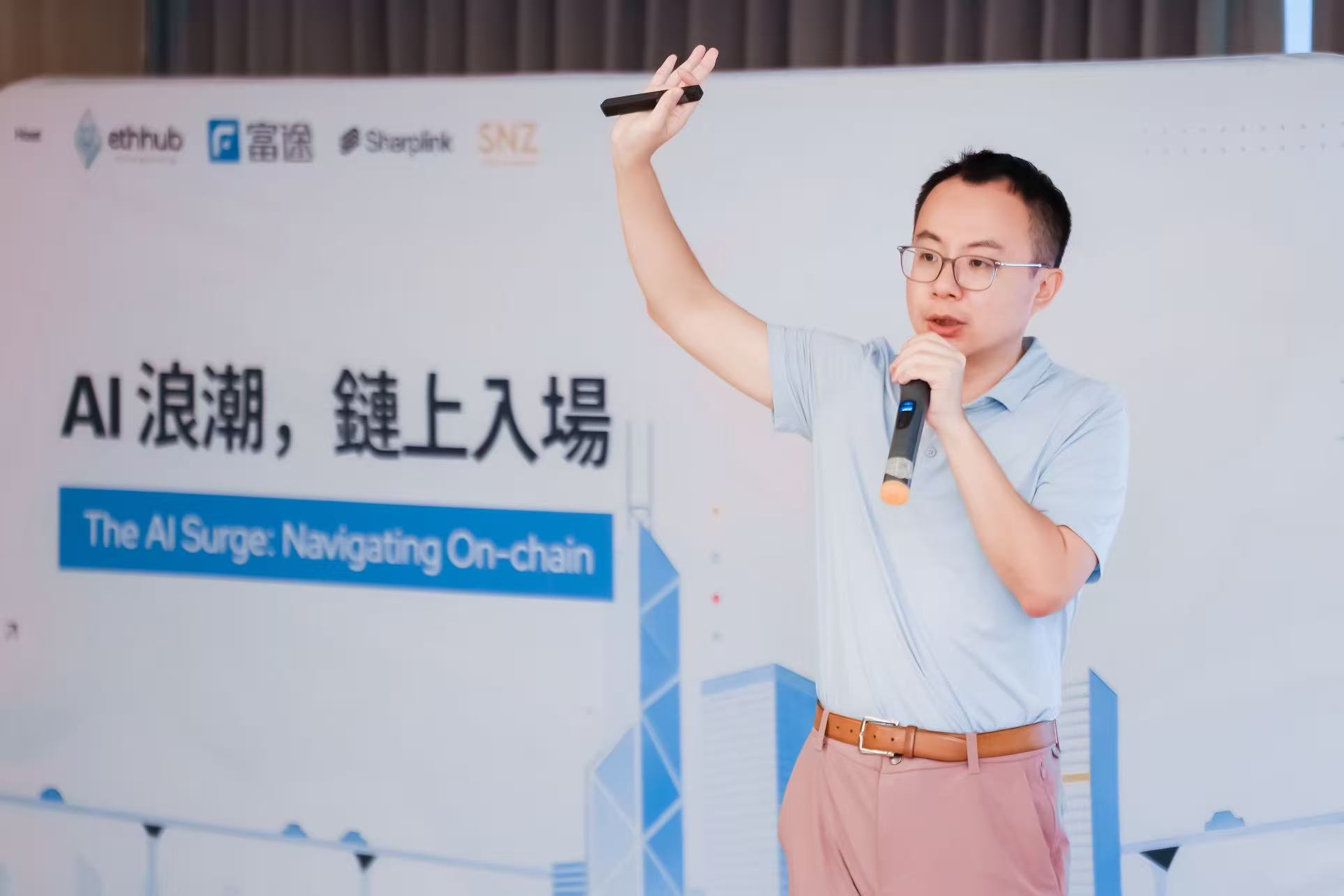
Frank: Mapping the AI Investment Cycle
Independent investor Frank (@qinbafrank) presented a framework for the current AI investment cycle, using Nvidia as the primary reference to map three distinct phases: valuation expansion driven by market expectations (H1 2023), validation through reported financial results (2024), and large-scale commercial deployment (present).
On comparisons to the 2000 technology cycle, Frank argued that the current AI buildout differs in three material respects:
- Enterprise AI adoption has increased from 9.7% to 18% penetration, crossing the critical diffusion threshold beyond which adoption curves historically steepen.
- AI-related revenues at major hyperscalers are consistently exceeding consensus estimates, providing empirical validation of return on investment at scale.
- AI primarily displaces software licensing and labour costs — both categories with near-zero marginal cost of substitution — producing a unit economics profile distinct from prior infrastructure investment cycles.
The institutional allocation framework he outlined spans three thematic tracks:
- Supply-side constraints: GPU capacity → HBM memory → power infrastructure → CPUs and custom ASICs
- Infrastructure modernisation: Co-packaged optics (CPO), 800V high-voltage DC power distribution, advanced semiconductor packaging
- Secular growth: Edge computing, physical AI, and industrial robotics
Looking Ahead
The forum closed with a private dinner, during which participants continued discussion on on-chain asset allocation strategy, compliance framework design, and the operational integration of AI agents into wealth management.
Across all four organising institutions, a shared view emerged: the convergence of AI and blockchain has progressed from investment thesis to active deployment. Futu's integrated crypto-to-securities infrastructure, Sharplink's strategic ETH treasury position of over 850,000 ETH, and Canopy's AI-driven operating model for family offices each point in the same direction. For institutional participants, the question in 2026 is no longer whether to engage with on-chain asset allocation — but how.
About the Co-Organisers
ETH Hong Kong Hub is Asia's first physical Ethereum community hub, supported by the Ethereum Foundation's Ethereum Everywhere team and co-operated by SNZ and ETHTAO. The Hub is dedicated to connecting Eastern and Western ecosystems and bridging traditional finance with decentralised innovation.
Futu is a leading integrated digital financial platform in Hong Kong. Its SFC-licensed virtual asset trading platform, PantherTrade, offers institutional and high-net-worth clients seamless access to both on-chain digital assets and traditional securities markets from a single account.
Sharplink (SBET) is a leading institutional-grade Ethereum treasury platform designed to give public market investors smarter, more productive exposure to ETH. Ethereum underpins the majority of global stablecoin, tokenized real-world assets, and decentralized finance settlement, making ETH a uniquely productive asset that combines native yield generation and long-term network growth.
SNZ is a research-driven investment firm active in Web3 and fintech since 2014, with a portfolio of over 200 companies across blockchain infrastructure, DeFi, payments, and real-world applications. One of Asia's earliest institutional backers of Ethereum, SNZ has been a consistent presence in ecosystem development and founder support since the network's inception.